Rack Shelving: What It Means and Which Family You Belong To
If you've searched for rack shelving, you're likely thinking of a metal shelving unit for your garage, storage room, or workshop. However, 'rack' means something else in the industry: pallet racking, the type loaded onto by a forklift with one-tonne pallets. They share the same name and almost nothing else: not the weight they support, how they are assembled, nor the regulations that affect them.
What is Rack Shelving and Why is the Term Confusing?
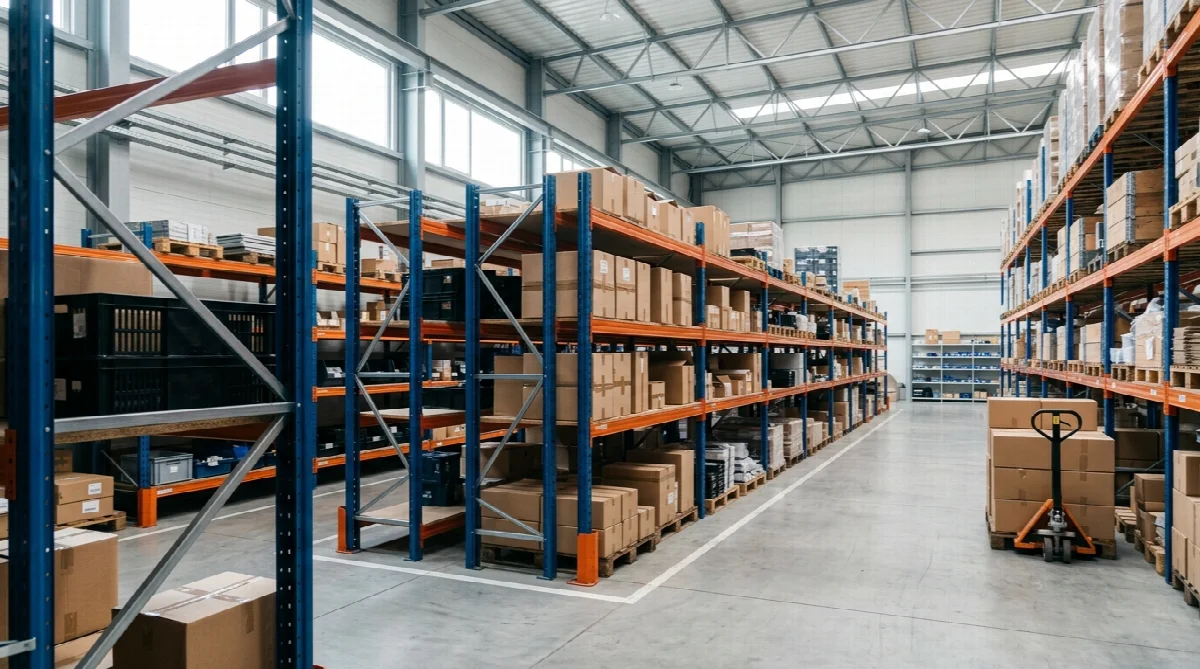
In warehouses, 'rack' refers to pallet racking: vertical steel frames, pairs of horizontal beams, and a pallet resting on each level. The terminology standard EN 15878 classifies it under palletised goods and separates it from manual handling shelving, which it places under the heading of small parts handled by hand. For the private buyer, however, 'rack' means any metal shelving unit with shelves: the kind assembled in an afternoon and filled with boxes.
The difference is important for safety: the usage standard for pallet racking is written for systems where handling equipment operates close to the structure, not for shelving that is loaded manually.
Pallet Racking: What the Industry Understands
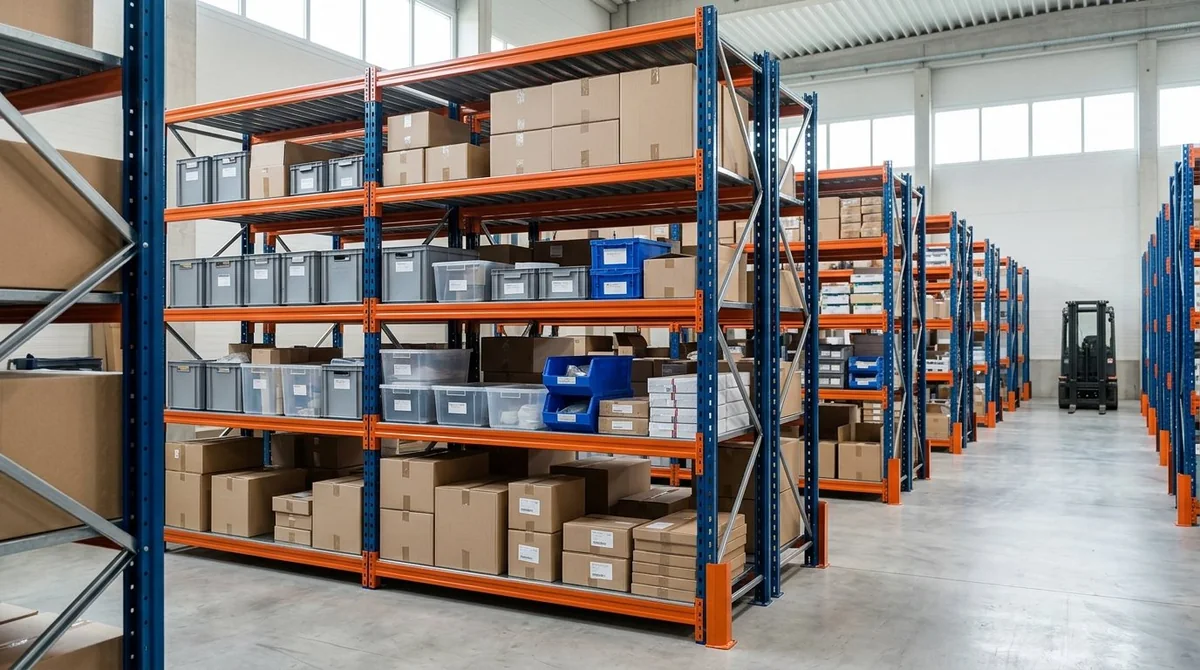
- Loaded by forklift and in full pallet loads. Its design standard is EN 15512, which covers conventional steel pallet racking and excludes manual handling shelving.
- Its use and maintenance standard is EN 15635, which only partially addresses other storage equipment and excludes domestic-type storage.
- These are the K-PAL pallet racking systems: frames of 255, 300, and 353 cm high, beams of 184 or 269 cm, depth of 100 cm, with 2 to 6 levels and 1,000 kg per level in the standard version or 1,500 kg in the reinforced version.
If this is what you're looking for, this is your section. If you don't have a forklift, read on.
Metal Shelving with Shelves: What the Private Buyer Seeks
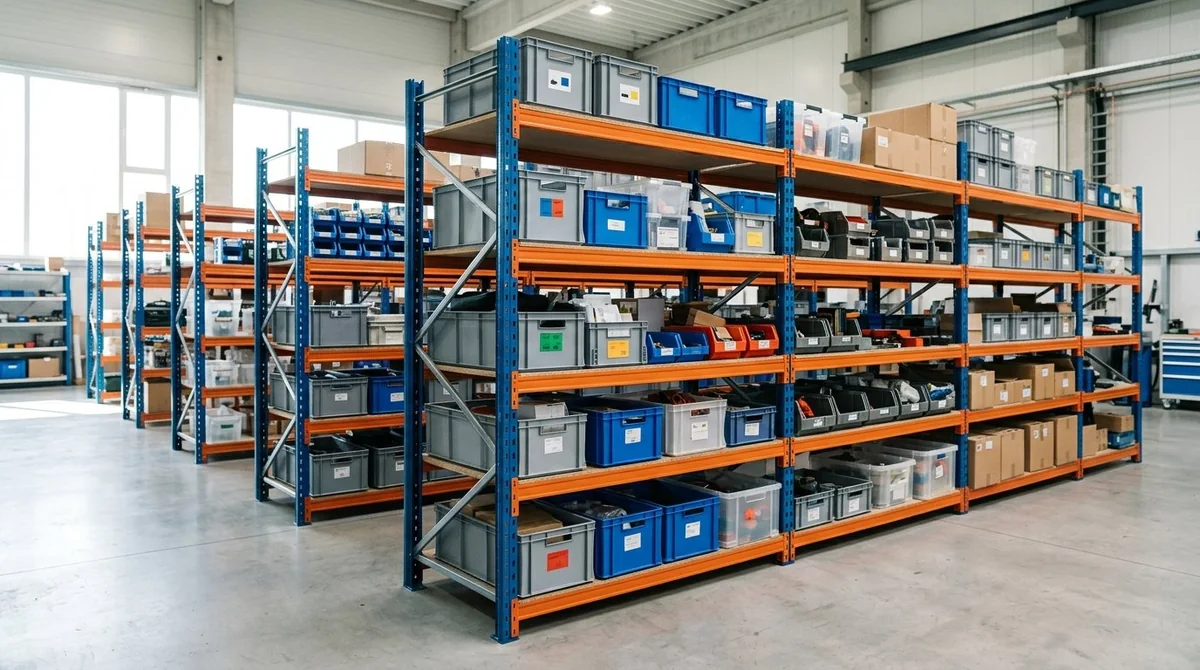
Here, loads are placed by hand onto continuous shelves. Capacity is expressed per shelf with distributed weight, and the module's capacity is the sum of its levels: it's chosen by the heaviest item, not by total volume.
How to Know Which Family You Belong To
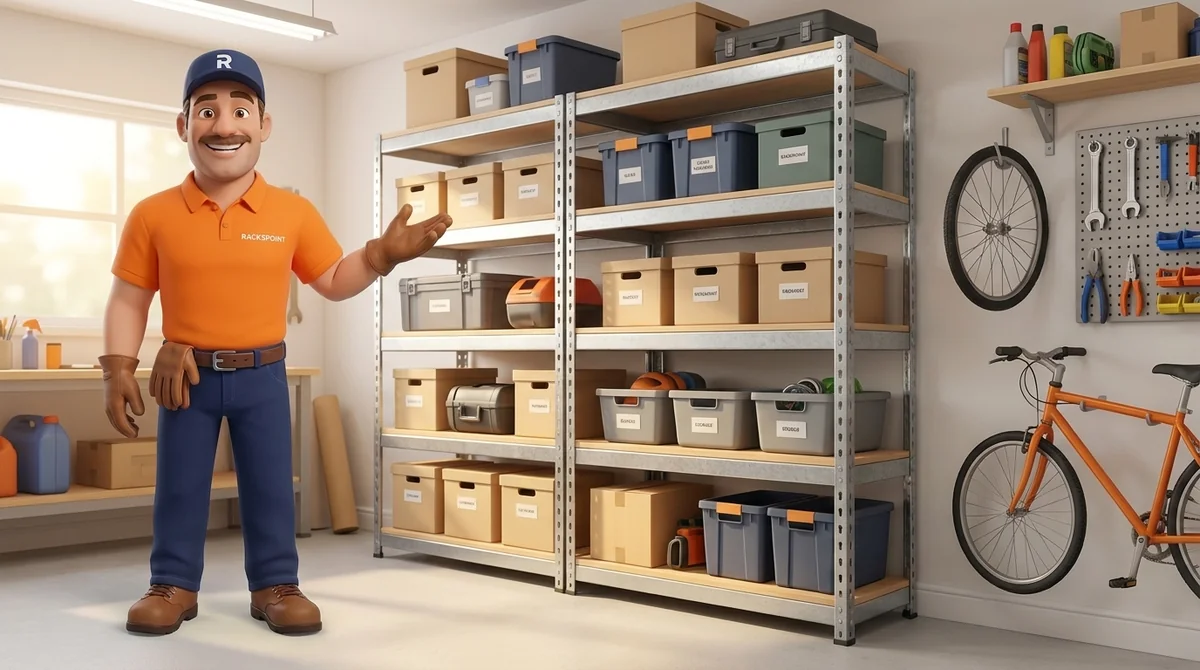
Garage or Storage Room in a Home: Light Load from 150 to 175 kg per Shelf
The URBAN range measures 180x90 cm, with a depth of 30 or 40 cm, has 5 levels, and supports 175 kg per shelf, 875 kg in total. It's sold as straight units from 1 to 4 modules, in L-shape, U-shape, as a corner unit, and with wheels; the wheeled version is the only one with a 60 cm depth (180x90x60 cm, 175 kg). Galvanised MDF versions, 150x70x30 cm with 5 levels and 160x80x40 cm with 4 levels, reduce capacity to 150 kg per shelf; the white MDF 180x90x40 cm maintains 175 kg. All are available in garage and storage shelving. The practical limit is usually the depth, not the weight: for large boxes, choose the 40 cm depth.
Wire shelving is the variant for pantries or where air circulation is desired: the chrome version, in 150x75x30, 180x90x40, and 180x120x45 cm; the black version, in 150x75x30 cm. All with 5 levels, 150 kg per shelf, and from 1 to 4 modules.
Workshop, Shop, or Small Warehouse: Medium and Heavy Loads
For sacks, drums, engines, or power tools, you move up a step. The figures are still per shelf:
- Medium Load: SP ProSpan 200x200x60 cm, 4 levels, and 200 kg; SP ProRack 180x120 cm with 45 or 60 cm depth, 5 levels, and 275 kg; SP Pro Glide 180 cm high by 120, 150, or 180 cm wide, 60 cm depth, 4 levels, and 300 kg.
- Tyres: Stackable rack 200x200x60 cm with 4 levels and 400 kg, and TyreRack 200x150x45 cm with 3 levels and 300 kg.
- Heavy Load: SP Titan C-Beam 180x150x60 cm, 4 levels, and 600 kg per shelf; SP Titan Span 250x200x60 cm, 4 levels, and 800 kg per shelf, 3,200 kg in total.
A shelving unit with 800 kg per shelf is still considered manual handling: it's loaded by hand or with a pallet truck, not a forklift, and therefore does not fall under pallet racking regulations.
What Regulations Apply to Rack Shelving in a Home?
None of the storage regulations usually cited, and this is not an oversight: their own texts state they do not apply to a private home garage. What governs in a home is general product safety, and that is the same across all European Union countries.
- EN 15635 excludes systems intended for domestic-type storage, and EN 15629 makes the same exclusion.
- EN 15512 is for the design of pallet racking and excludes manual handling shelving.
- Industry guides and the occupational health and safety regulations of each country, when referring to conventional shelving, focus on palletised loads and do not mention shelf-based units.
- Occupational health and safety regulations govern work, not the home.
What does apply at home is general product safety. Regulation (EU) 2023/988, applicable from 13 December 2024, requires only safe products to be placed on the market and that they be accompanied by clear and understandable safety instructions and information; consumer regulations require the product to include instructions for its correct use. In translation: the standard you must comply with is the manufacturer's assembly sheet and the load per shelf.
And If the Shelving is in a Workshop or a Warehouse with Workers
Shelving can be considered work equipment under the European directives on work equipment, whose annexes require equipment to be stabilised by fixing or other means when necessary for safety, and that assembly comply with the manufacturer's instructions. Regulations require periodic checks but do not set a deadline: they refer to the manufacturer's manual. What is generally required is: strength and stability of the structure for the intended load, adequate anchoring of the shelving, adherence to the maximum permissible load, and placing heavier objects on lower levels. Directives on workplaces add a minimum width for aisles. The occupational regulations of each country apply, and the starting point remains the manufacturer's manual.
Usage Rules That Apply to Both Families
These come from industry guides, written for warehouses: on shelved units, they are transferable criteria, not obligations, and as criteria, they apply equally throughout the European Union.
- Heavy items below. Heavier loads on upper levels cause overloading: the heaviest items go on the lower levels.
- Never climb on the shelving. Storage guides expressly prohibit this, and a wire or MDF shelf is not designed for a person's weight.
- Respect the load per shelf and distribute it. In a warehouse, maximum loads per level and per bay are marked in a visible place, preferably at the bay ends; at home, the product data sheet serves this purpose.
- Modify only when the shelving is empty. For pallet racking, it is also required that this be done by qualified personnel; changing shelf heights or adding modules should be done after unloading.
- Anchor according to the manufacturer, and here the two families diverge. For manually loaded units, a European manufacturer today considers units stable if the last shelf with a load is at a height no more than five times its depth, with fixing to the floor or wall. An Urban unit 180 cm high and 30 cm deep is six times taller than it is deep: fix it as indicated in its assembly sheet.
- Inspect. In a warehouse, a daily visual inspection is carried out by staff. At home, it's sufficient to check, when reorganising, that the posts are vertical and no shelf is sagging.
Frequently Asked Questions about Rack Shelving
Is pallet racking suitable for a home garage?
It can be assembled, but it's not cost-effective. A K-PAL module is at least 255 cm high and 100 cm deep, and its level is designed for 1,000 kg on a pallet: without a forklift, there's no way to load it like that. An URBAN unit of 180x90x40 cm with 175 kg per shelf takes up less than half the depth and is loaded by hand. Pallet racking is advantageous when goods enter and leave in full pallet loads.
How much weight can a 180x90 cm garage shelf support?
In the URBAN range, 175 kg per shelf with distributed load and 875 kg for all 5 levels combined; the galvanised MDF versions of 150x70 and 160x80 cm reduce capacity to 150 kg, as does the wire shelving. If the heaviest item you plan to place exceeds this figure, the next step up is medium load, from 200 to 300 kg per shelf.