Corner Workbench Solutions: Optimise Your Workshop Space
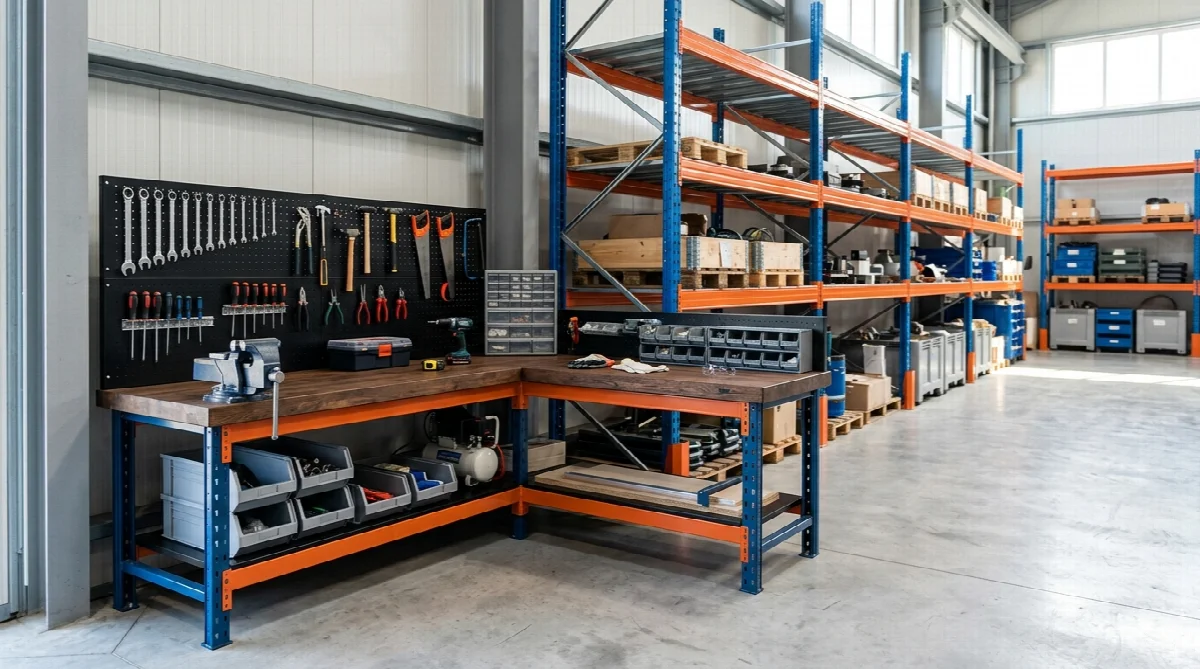
The concept known in Germany as Eckwerkbank, which we translate as corner workbench, is the ultimate solution for those who feel their workshop or garage is becoming too small. Often, the corners of our work areas become dead spots where we only accumulate dust or forgotten boxes. However, with the right design, this nook can be transformed into the operational heart of your activity.
By integrating an angled work surface, you not only gain useful square metres but also create an ergonomic workflow. With everything within reach, you avoid unnecessary movement, which translates into greater efficiency, whether in domestic DIY projects or more demanding industrial environments.
Benefits of Installing a Corner Workbench
The main advantage of this type of furniture is space optimisation. While a linear workbench occupies an entire wall, the corner design takes advantage of the intersection of two walls, leaving the rest of the room free for other elements, such as our light-duty shelving for garages and storage rooms, ideal for maintaining vertical order.
In addition to space savings, these structures offer superior stability. By being anchored to two walls, the rigidity of the entire unit increases considerably, allowing you to perform tasks that require strength or precision without the table wobbling. If you need additional mobility in other areas of the workshop, you can complement your workspace with service and tool trolleys with wheels, facilitating the transport of heavy materials between different points in the warehouse.
How to Organise Your Corner Workbench
- Cutting and Assembly Zone: Use the central vertex for tasks requiring a larger surface area.
- Tool Panel: Utilise the side walls to hang pegboards; this way, your wrenches and screwdrivers will always be in sight.
- Lower Storage: Install shelves or drawers under the work surface to store consumables or power tools.
- Focused Lighting: Place LED strips under upper shelves to avoid shadows while you work.
If your activity requires handling more bulky components, it is essential to combine your corner workbench with robust storage systems. You can explore our medium-duty metal shelving to organise the materials you use most frequently, ensuring that the work environment remains clear and safe.
Workshop Safety Considerations
Safety is a fundamental pillar in any workspace. When designing your workbench, ensure that the materials are resistant to intensive use. If you work with oils, chemicals, or cutting tools, the surface should be easy to clean and, preferably, fire-retardant. Remember that, according to industry guidelines and the relevant health and safety legislation for work equipment in your country, it is vital to keep passageways clear of obstacles and ensure all metal furniture is correctly levelled.
For larger projects, where the workload is constant, it is advisable to review the current regulations to ensure your workshop design complies with ergonomics and prevention standards. A well-planned space is not only more productive but also drastically reduces the risk of accidents and injuries from poor posture or falling materials.
In conclusion, adapting a corner workbench is a smart investment. You're not just buying a table; you're redesigning your way of working so that every tool and every material has its place, allowing you to concentrate on what really matters: your project.